The Thinking Monkey

Response to Dougal McKenzie’s “The Painting Monkey”
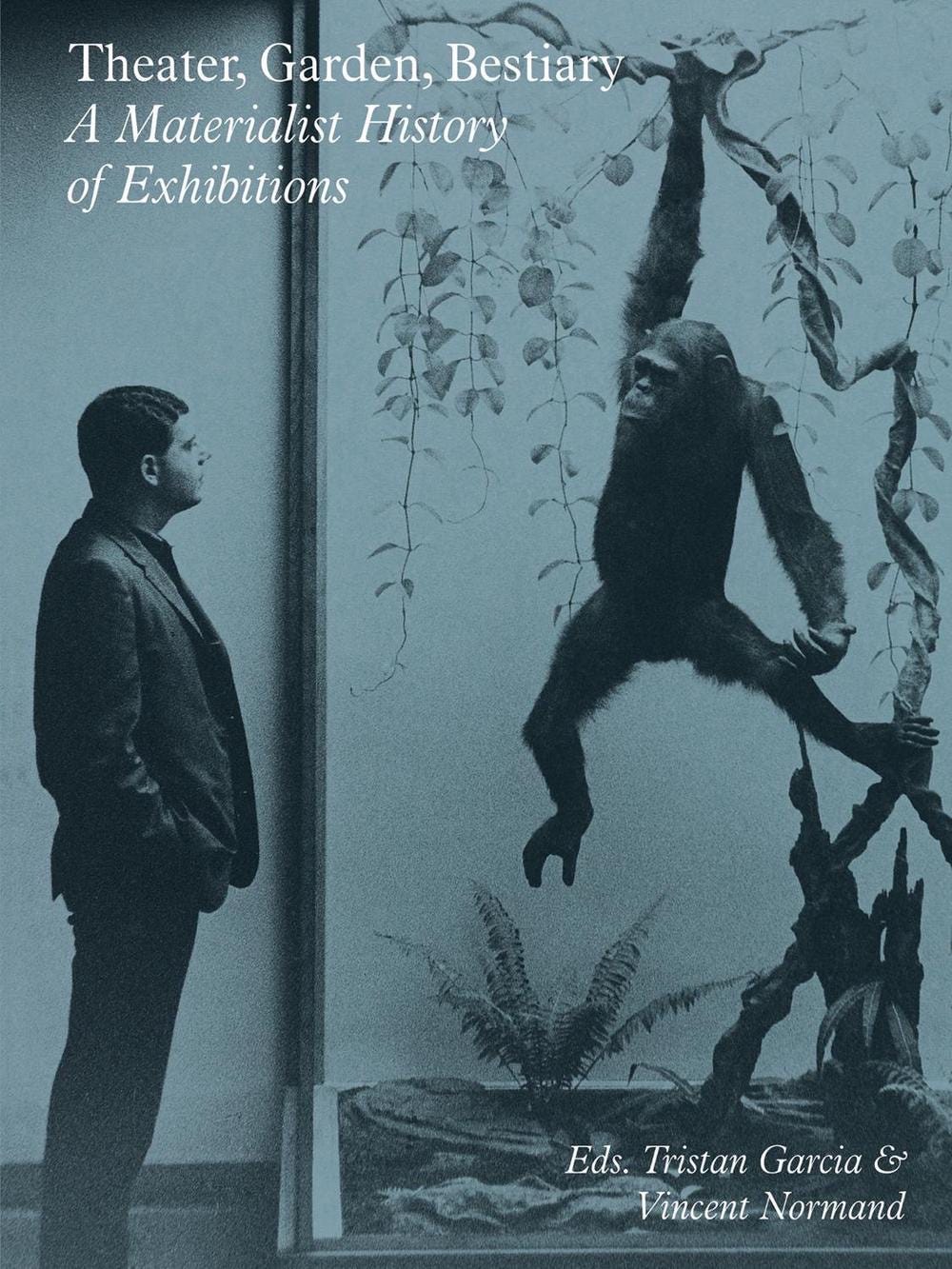
Lily Briscoe, the central character of Virginia Woolf’s To the Lighthouse, and a process-driven painter without resolution, is an artist who can’t think without a paint brush in hand (a good title and foil for a podcast with painters holding a paintbrush in hand, thinking). What she represents, beyond Virginia Woolf herself as a writer who can’t think without a pen in hand, is that thinking is procedural for the painter. Dougal McKenzie’s latest Substack post, The Painting Monkey, on what might matter most to painters—“matter” being an accidental pun or not—is an example of the same, thinking through the procedure of painting a monkey on newspaper in response to an awakening moment that theory is not what matters to the painter, but the painting procedure of painting. This ‘against theory’ vignette arrives on the back of a series of Substack articles by me, alongside an online assembly facilitated by Damien Flood and I, reflecting on the loss of theory in contemporary painting. The central provocation remains: do paintings think, or do painters think?
When Dougal talks about theory and painters as monkeys, only interested in the formal pursuits and materiality of painting, like a monkey might (which is, frankly, disrespectful to monkeys), I think immediately of Francis Picabia’s Natures Mortes: a ready-made monkey pinned to a board, surrounded by the names of canon artists: Rembrandt, Cezanne, circling in a dead orbit. Picabia was already giving up on pure notions of painting or the avant-garde after a stint with Dada. He was reflecting on it, critiquing it, thinking through it. Theory was his eclipse but also his lodestar. But this is history again, both permission and negation of the painter’s present.
And yet theory is Dougal’s eclipse and lodestar. He is painting a monkey in response to the notion of theory. He’s writing in response to the notion of theory. That is theory. It is like the case of Susan Sontag writing interpretatively and theoretically in Against Interpretation.
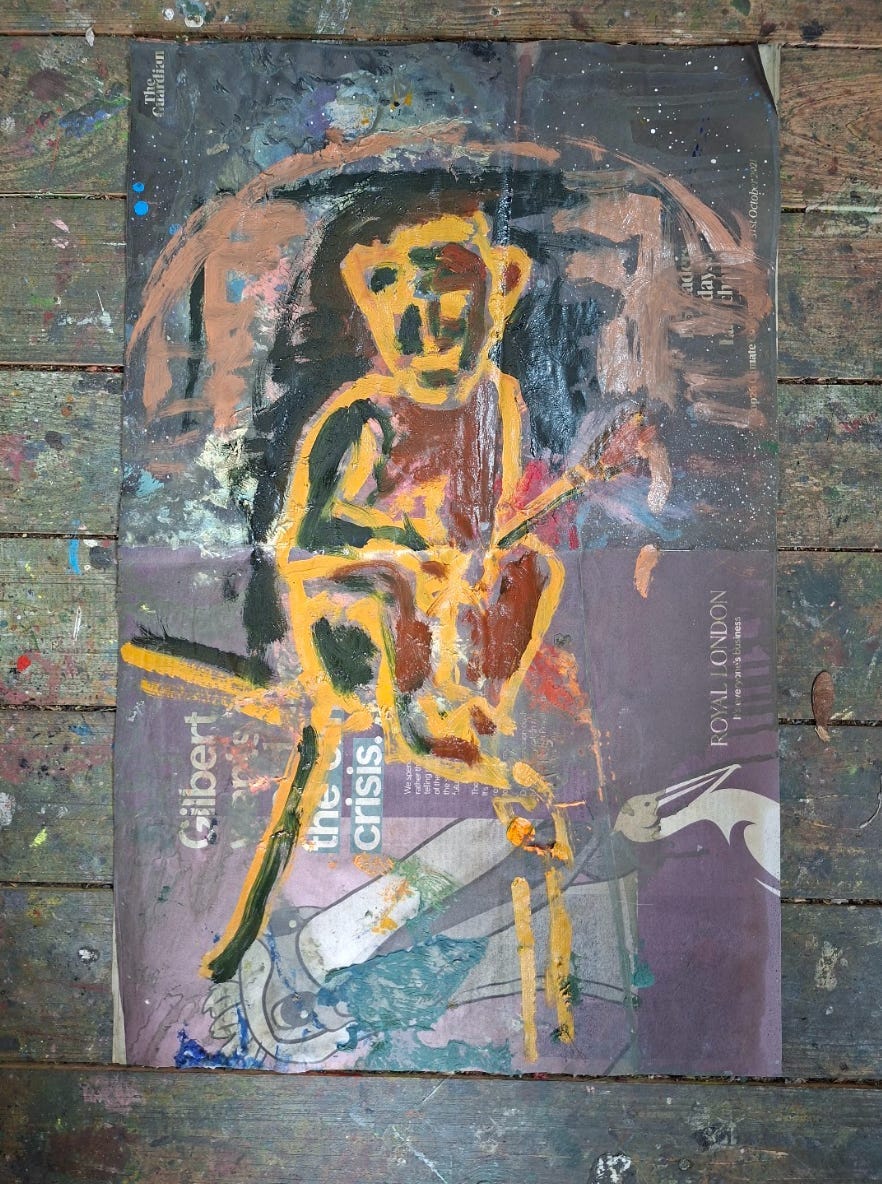
Further, Dougal’s slapdash painting on a sheet of newspaper of a monkey, made to illustrate his point, is a form of pure theory, in that it is reactive, coincidental or not, to the moment, spurred on by us perhaps? Or better still, reflexive of the theoretical zeitgeist in art outside institutions of art education, where pure theory comes with endnotes, not coke nose from “inhaling line by line” (Sylvère Lotringer).
Theory isn’t something that muddles the make and do of painting. It can awaken a painter to the present, to a pursuit beyond mere materiality. Of course, materiality is still there, still playing out in the procedural, but thinking is also being exercised or exorcised in the act. Ideas can enter the taxidermied husk of formal painting; we just deny their existence for the thin call of beauty.
It’s telling that Dougal points and repeats pointing toward Guston. Guston’s idea being: without speech, without reading, painters would just be painting monkeys. And yet Guston, as Dougal retells, read, talked, talked, talked. And yet, amidst all this reading and talking and theory, he still managed to make some quite good paintings along the way. That’s the irony.
Myself and Damien (and I won’t put words in his mouth—we’re in a space of neutrality here) are trying to understand what’s happening to painting under digitisation, under its commodification as image and the erasure of theory. It doesn’t need to constantly loop back to Guston. Guston needs to be eaten, chewed, digested, and shit out. And from that pile of shit, something else might emerge, more than fleas.
And theory, this is the thing, isn’t just about thinking and sure isn’t about citation. It’s what Lotringer called “pure theory”, again: something you can inhale line by line, without reference, without citation. Something you can shit out again, transformed, reconstituted in the hands of the artist. I think theory, as in Dougal’s painting monkey, is already being spouted by paintings, by painters; it’s just that we have lost the language to articulate painting beyond its now existence as image or hashtag as caption.
So maybe that’s where we are. A moment of neutrality. A moment where painting and painter explore other back doors, other ways of exiting the weight of linear history and the ahistorical weightlessness of digital dissemination.
So Dougal, please, could you share a high-res image of your monkey on newspaper? I think it is exactly the mascot we need for the project. It may even make the cover of the zine. Or back-door cover!
As always, email: smallnightzine@gmail.com with your responses, images, ideas and theories; they are welcome and needed.
An interesting rebuttal James, thank you. May I just clarify, and underline, that in saying "too much theory, too much talking", and by furthermore placing my argument within the "studio setting", my point really was to examine the painter's faculties within the actual act of making. So, not to diminish theory's place, but to apportion it. You must also allow me to keep circling back to Guston, as is my want, for the ghosts of other painters are always more present in the studio than any theorist can ever be. Along with, of course, the ghost, or totem, of the painting monkey. Good luck with the forthcoming project.