Waves flex & Flatten
Boards of Canada 13 Years Missing

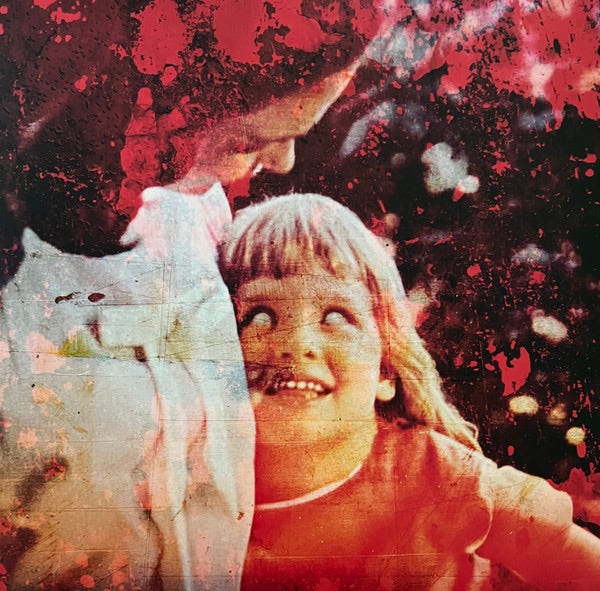
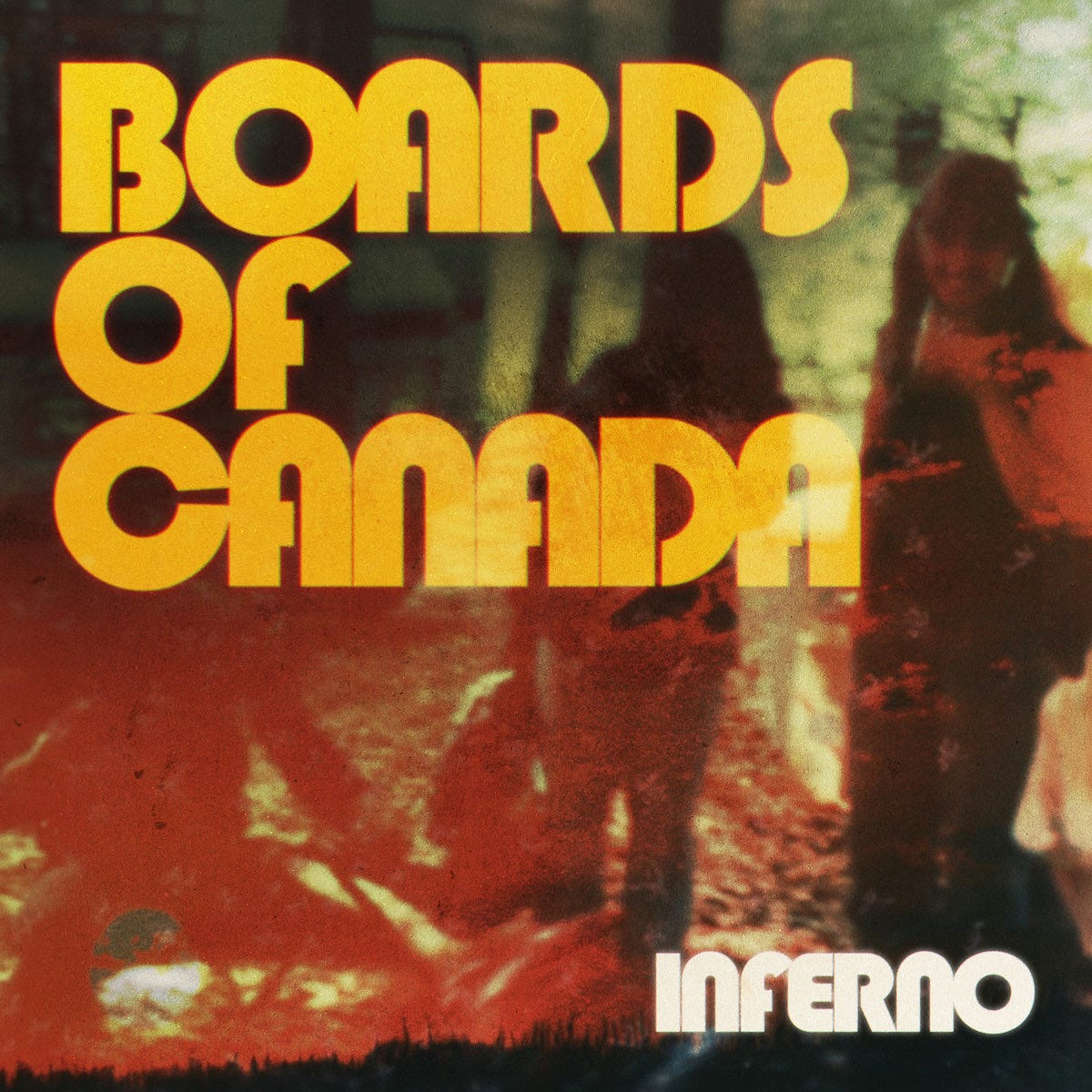
With the release of Boards of Canada’s album Inferno after 13 years MIA, I began to think about the artist as a cultural producer subject to a particular regime of productivity. A conveyor-belt productivity, including Instagram posts. I began to think about the once-in-a-lifetime wave upon which artists have to catch and then ride, eventually crashing to shore, only to look back on the horizon from which they first emerged as a blip on the curator’s or dealer’s radar, a quickening heartbeat, ba-dum, ba-dum, ba-dum, eventually slowing to a baaaaaaduuummmm…. to then push off the quicksand and turn and walk into the dunes, disappeared, a grain in the entropy of time and being.
Waves flex and flatten. What does it really mean to produce work on a wave of reception and opportunity, where there is no real pause or reflection—certainly not thirteen years of pause and reflection—and whether we ever really experience that wave of reception and opportunity we are expected to catch and ride without hesitation or critical thought. Accept or die. I’ve always said—and I repeat myself again because I’ve said this and written this so many times—that we ought to come to a point where we miss artists and their work; that it shouldn’t become a case of saturation, then envy, then tolerance. I’ve never taken that advice, although I have avoided the shore of Isolation Island by pivoting onto the ripples that return out to sea. I’m not really an exhibiting artist, but I continue to produce in a middle or third space of cultural production. I feel I have to work and work and work, produce and produce and produce, and somehow make contact with the public sphere, otherwise I’ll lose purchase. And that purchase is never really equated with money or cash in hand. Whatever money or funding comes in always seems to go straight back into the ocean of process and production.
Listening to BoC’s Inferno, which I’ve had on repeat all week, while also dipping back into their catalogue, I’ve been thinking about the album in terms of time. Thirteen years is a long time not to produce an album. While listening, I’m picking up on the layering of time in each track, and that residue of nostalgia that already haunts their music, but doubly so in the gap between then (2013) and now (2026). The layering of their sound, a strata of sonic residue, becomes a layering of time: present, past, future nostalgia.
But I’m also wondering about how artists evolve their sensibilities over time, with too much withdrawal or not enough. How they evolve with respect to how they make work over time, with an audience in mind, and how all of that is affected by the production of artefacts that represent, but never can be, the manifestation of process and time itself. I’m thinking about that conveyor-belt production that appears every two, seven, thirteen years. Those rhythms and intervals between process and ta-da (rather than ba-dum) must shape the work differently. They must shape the artist differently.
Because perhaps what is being accumulated during those periods is not simply a body of work but a sensibility. A way of seeing. A way of feeling. A way of processing experience through particular materials and forms. I wonder about the relationship between successive exhibition-making and the freedom to simply sit with frustrations, uncertainties, and unresolved ideas. To bear them without immediately converting them into public form. To resist the lure of the public sphere, the lure of exhibition-making, the lure of visibility itself.
In the case of Boards of Canada, there is something remarkable about releasing an album after thirteen years to an audience that had largely convinced itself that the previous album was the last one; that they had disappeared for good. Or take Donna Tartt. Ten years separated The Secret History and The Little Friend. Eleven years separated The Little Friend and The Goldfinch. And now, as I write this, it has been twelve years and seven months since the publication of The Goldfinch. Readers continue to wait, not knowing whether another novel will appear, or whether the last book has already been written. Perhaps that waiting becomes part of the work itself. Part of its mythology. Part of its reception.
And I find myself wondering what happens to an artist’s sensibility under these different temporal conditions. What becomes possible when there is no immediate demand to produce? What develops when ideas are allowed to remain unresolved for years rather than months? Some would say destructive sensibilities develop. Or that the artist becomes a hoarder of their own work, walled within their memories. And conversely, what kinds of sensibilities emerge when work is continually pulled towards the next exhibition, the next deadline, the next public appearance?
There’s something in that for visual artists. If you’re exhibiting all the time, when you’ve caught that wave of attention—whether institutional attention, commercial attention, or whatever form it takes—I can’t imagine having the space for that kind of accumulation. I went on that wave myself for about four years after my MFA, with nine solo shows and countless group shows. I was producing all the time, but I wasn’t really experiencing those moments of reflection, even the depression that comes after an exhibition, because there was always another project waiting around the corner. And I know we all have an appetite for exhibiting when we get it. At first it seems like the worst thing in the world to put yourself out there, but then you get a taste for it, a feeling for it, and it arrives with that strange love-hate relationship. That attraction and repulsion.
I’m also trying to enter the heads of the two artists behind Boards of Canada. How they work together. How they come together. There is an enigma around them, as there is around a lot of electronic musicians: Aphex Twin and others. But there’s something compelling about the idea of holding off for a very long time, even when opportunities are there. We always think the opportunity in front of us is the last opportunity we’ll ever get. So we take it. But imagine if we stopped.
I remember an artist who was very visible within our own art scene. He decided to take a year off exhibiting, despite having numerous offers. He simply wanted to step back and stop. It worked out for him in the end. After that hiatus he was picked up by a gallery and began exhibiting internationally. Weirdly, he lived up to his own appetite for withdrawal, or perhaps it was simply serendipitous that things unfolded that way.
I’m also thinking about Robert Armstrong and a show he had when I was doing my master’s. At that point he hadn’t exhibited for seven years. I remember feeling that there was time in those paintings. Time that perhaps wasn’t as evident in later exhibitions when the rhythm of commercial gallery programming became more regular, every two years or so. Seven years is very different from two years. It even contains the word “itch”, a useful metaphor for change, for the impulse to pivot.
What is the fear here? It is the fear of withdrawing, of slowing down, of not answering or sending emails. There are lots of artists out there taking opportunities they know they don’t really have the capacity to work through, conceptually or physically. But they take them because they feel that if they don’t, the opportunity is gone forever. So we ride the wave when it comes. And then perhaps we disappear for thirteen years. Or forever.
Ah Geodaddi is a favourite album to paint with. And the Goldfinch, fave coming-of-age read! Doesn't 13 years feels like a lifetime ago?!